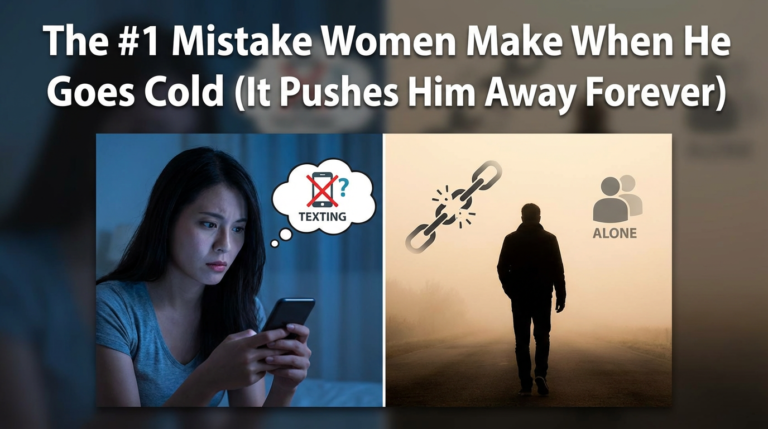
“We need to talk.”
Rachel stared at the message she’d just typed but hadn’t sent yet. Her finger hovered over the send button, trembling slightly.
It had been three days since Jake’s energy shifted. Three days since his texts went from paragraph-long messages with emojis and questions about her day to one-word responses that arrived hours late. Three days since “Good morning beautiful” became radio silence until noon.
She could feel it in her bones—that sick, sinking sensation that something was wrong. The warmth had evaporated. The connection felt fragile, like a thread about to snap.
Every relationship article she’d ever read, every piece of advice from well-meaning friends, every instinct in her body was screaming the same thing: Address it. Communicate. Have the conversation. Don’t let it fester.
“We need to talk about what’s going on between us. I feel like you’ve been distant lately and I want to understand what’s happening.”
It seemed reasonable. Mature. The “right” thing to do when you sense your partner pulling away.
So she pressed send.
And with that single message, she sealed the relationship’s fate.
Within two weeks, it was over. Not because of anything that was actually wrong between them. Not because Jake didn’t care about her. But because of that one text—and everything it represented.
Rachel had made the single biggest mistake women make when a man goes cold. And it pushed him away permanently.
If you’re reading this, you probably know exactly what I’m talking about. You’ve felt that shift—when his energy goes from hot to lukewarm, when his texts become sparse and perfunctory, when you can sense him creating distance even though nothing “officially” changed.
And you’re fighting every instinct in your body not to address it directly. Not to ask what’s wrong. Not to try to “fix” whatever’s happening through conversation and processing.
Because here’s what almost no one tells you: When a man goes cold, the absolute worst thing you can do is try to talk about it.
I know that sounds backwards. It goes against everything you’ve been taught about healthy communication in relationships. It contradicts the modern advice about being direct and expressing your feelings and not playing games.
But it’s the truth. And understanding why—understanding the fundamental difference in how men and women process emotions and connection—is the difference between pushing him away forever and drawing him back in naturally.
In this article, I’m going to show you exactly what that #1 mistake is, why it’s so destructive to male psychology, and what to do instead. This isn’t about playing games or manipulating him. This is about understanding how men actually work and responding in a way that honors that reality instead of fighting against it.
You’re going to learn:
- The specific mistake that makes him shut down completely (and why your instincts are leading you wrong)
- The neurological reason why “talking about it” makes things worse with men
- What’s actually happening in his mind when he goes cold (it’s not what you think)
- The exact strategy that reverses the dynamic and brings him back without chasing
- How to distinguish between normal emotional fluctuation and actual relationship problems
- The counterintuitive approach that makes him pursue you again
By the end of this article, you’ll understand why everything you’ve been taught about handling this situation is backwards—and what actually works to restore connection and attraction.
Let’s begin.
Table of Contents
- The #1 Mistake: Trying to “Talk About It” When He Goes Cold
- Why This Destroys Attraction (The Male Psychology Explained)
- What’s Really Happening When He Goes Cold
- The Neuroscience: Why Men Shut Down When You Try to Process
- How Women Accidentally Create the “Pursue-Distance” Cycle
- The Five Things You’re Actually Communicating (When You Think You’re Just “Talking”)
- What to Do Instead: The Counter-Intuitive Strategy That Works
- When It’s Actually Time to Have “The Talk” (And How to Do It Right)
- Real-Life Case Studies: What Worked and What Didn’t
- How to Trust the Process (When Every Instinct Says Otherwise)
<a name=”mistake-talk-about-it”></a>
The #1 Mistake: Trying to “Talk About It” When He Goes Cold
Let me be crystal clear about what the biggest mistake is:
When you notice him going cold or creating distance, the worst thing you can do is initiate a conversation about the relationship, his feelings, the distance you’re sensing, or “what’s going on between us.”
This includes:
- “We need to talk” texts or conversations
- “Are we okay?” check-ins
- “I’ve noticed you’ve been distant lately” observations
- “Did I do something wrong?” questions
- “I feel like something’s changed between us” statements
- “Can we talk about where this is going?” discussions
Every single one of these—no matter how calmly, maturely, or “non-confrontationally” you approach them—activates a psychological response in men that creates more distance, not less.
Insert image: Woman anxiously looking at phone, waiting for response
Why This Feels Like the Right Thing to Do
Before we go deeper into why this is so destructive, let’s acknowledge why it feels like the right approach:
1. It’s what you would want. If you were feeling disconnected in a relationship, having a conversation about it would help you feel better. Talking through feelings creates connection and relief for most women. So naturally, you assume it would work the same way for him.
2. All the advice says to communicate. Every relationship article, therapist, and expert emphasizes the importance of communication, vulnerability, and expressing your feelings. So when something feels off, communication seems like the obvious solution.
3. Silence feels like avoidance. Not addressing the elephant in the room feels like you’re playing games or being inauthentic. It feels like you’re ignoring a problem that needs to be solved.
4. Your anxiety demands resolution. When you sense him pulling away, your nervous system goes into high alert. You need to know what’s happening. You need reassurance. You need to “fix” whatever’s wrong so you can stop feeling anxious.
All of these reasons make perfect logical sense. The problem is, they’re based on female psychology, not male psychology.
And when it comes to handling emotional distance in relationships, men and women are fundamentally, neurologically different.
What Actually Happens When You Try to Talk About It
Here’s the typical sequence of events:
Day 1-3: You notice his energy has shifted. He’s less responsive, less engaged, creating subtle distance.
Day 4-7: Your anxiety builds. You analyze every interaction. You wonder what you did wrong. You consider whether to address it.
Day 7-10: You decide you need to communicate like a “mature adult.” You initiate some version of “We need to talk” or “I feel like something’s off between us.”
Immediate response: He either:
- Withdraws further and gives vague reassurances (“Everything’s fine, I’m just busy”)
- Gets defensive (“Why are you being so needy?”)
- Agrees to talk but the conversation feels forced and doesn’t resolve anything
- Completely shuts down emotionally
Week 2-3: The distance increases exponentially. What was a small gap becomes a chasm. He pulls away even more. Your anxiety intensifies. You try to talk about it again, which makes things worse.
Week 4+: The relationship either ends or becomes a shell of what it was—two people going through the motions with the spark completely gone.
Sound familiar?
This pattern plays out in countless relationships. And it starts with that one attempt to “talk about it” when he first goes cold.
[To understand more about why men pull away in the first place: /7-silent-reasons-hes-pulling-away]
“The moment you make his withdrawal a relationship problem that needs to be discussed, you transform a temporary emotional fluctuation into a permanent relationship issue.”
The Core Truth
Here’s what you need to understand: When a man goes cold, it’s almost never about the relationship itself. It’s about something happening internally for him.
But the moment you turn it into a relationship conversation—the moment you make it about “us” and “where we stand” and “what’s wrong”—you transform his internal process into a relationship problem.
And once it becomes a relationship problem in his mind, the dynamic fundamentally changes. You’ve gone from being his girlfriend (someone he enjoys, someone who makes his life better) to being a source of pressure and obligation.
That shift is often irreversible.
<a name=”why-destroys-attraction”></a>
Why This Destroys Attraction (The Male Psychology Explained)
To understand why “talking about it” is so destructive when he goes cold, you need to understand three fundamental truths about male psychology:
Truth #1: Men Process Emotions Through Action, Not Conversation
Women are verbal processors. We understand our feelings by talking about them. We feel closer to people when we share emotions and have deep conversations about what’s happening internally.
Men are action processors. They understand their feelings by working through them—literally, through physical action, problem-solving, or time alone processing internally.
Dr. Louann Brizendine, author of The Male Brain, explains that the male brain has smaller neural connections between the limbic system (emotion center) and the language centers. This neurological reality means that men genuinely struggle to articulate emotions in real-time.
When a man is going through something emotionally—stress at work, internal pressure about life direction, uncertainty about the relationship—his instinct is to retreat, process alone, work through it internally, and only re-engage once he’s sorted it out.
This is not avoidance. This is how male emotional processing works.
When you force a conversation during this processing period, you’re asking him to do something his brain is literally not equipped to do well: articulate feelings he hasn’t fully processed yet while simultaneously managing the emotional needs of another person.
The result? He shuts down, gets defensive, or gives you surface-level answers that don’t satisfy you—which makes you push harder for “real” communication, which makes him shut down more.
Truth #2: Men Experience Relationship Talk as Pressure
Here’s something most women don’t realize: When you initiate a “we need to talk” conversation, men don’t hear “I want to connect with you.” They hear “I’m about to tell you all the ways you’re failing.”
Even if that’s not your intention. Even if you approach it calmly and use “I feel” statements and follow all the communication rules.
The very act of initiating a serious relationship conversation signals to him that:
- Something is wrong
- He’s responsible for it
- He needs to fix it
- His performance in the relationship is being evaluated
- He’s currently failing that evaluation
Dr. John Gray, in Men Are from Mars, Women Are from Venus, calls this “the cave phenomenon.” When men face relationship pressure, they instinctively retreat into their “cave” to avoid feeling judged or criticized.
The more you try to draw them out through conversation, the deeper into the cave they go.
Insert image: Illustration of man retreating into metaphorical cave
Truth #3: Neediness Kills Attraction
This is the hardest truth for most women to accept: When you initiate relationship talks because you’re anxious about his withdrawal, you’re communicating neediness.
I know that feels harsh. But from a male perspective, here’s what “We need to talk about what’s going on between us” translates to:
- “I can’t handle your normal emotional fluctuations”
- “I need constant reassurance”
- “Your feelings are my responsibility to manage”
- “I’m monitoring the relationship so closely that any small shift sends me into panic mode”
None of this is attractive. In fact, it’s the opposite of attractive.
Men are attracted to women who are secure, grounded, and not dependent on male validation for their emotional stability.
When you can’t handle him being slightly less responsive for a few days without initiating a serious conversation about it, you’re signaling insecurity and emotional dependence.
And insecurity is attraction repellent.
The Paradox of Relationship Processing
Here’s the paradox that most women struggle with:
The more you try to create closeness through relationship talks when he’s withdrawn, the more distance you create.
Women think: “If we just talk about it, we’ll feel closer and understand each other better.”
Men think: “She’s making a big deal out of nothing, and now I feel pressured and judged, which makes me want to be around her less.”
The very act of trying to process the distance creates more distance.
This is why the #1 mistake is so deadly. It takes a temporary emotional fluctuation (his cold period) and transforms it into a permanent relationship problem through the act of trying to address it.
<a name=”whats-really-happening”></a>
What’s Really Happening When He Goes Cold
Before we talk about what to do instead, you need to understand what’s actually happening when a man goes cold. Because most women completely misinterpret it.
It’s Usually Not About You
This is the single most important thing to understand: When a man goes cold in a relationship, 80% of the time it has nothing to do with you or his feelings for you.
Here’s what’s typically actually happening:
1. Work/Career Stress
Men tie their identity and self-worth to their professional success in ways women often don’t fully grasp. When a man is stressed about work—a project going badly, a conflict with a boss, feeling behind in his career—his entire nervous system goes into stress mode.
And when in stress mode, his brain literally cannot engage romantically. The prefrontal cortex (responsible for complex social interaction) goes offline, and the amygdala (responsible for threat detection and survival) takes over.
He’s not choosing to be distant from you. His neurological stress response is making intimacy impossible temporarily.
2. Internal Pressure About Life Direction
Men experience enormous internal pressure about whether they’re “on track” in life. Are they where they should be financially? Career-wise? In terms of life achievements?
When they feel like they’re falling behind or haven’t figured out their path, they withdraw to deal with that anxiety internally. The relationship becomes something they’ll “focus on” once they’ve sorted out this bigger existential question.
3. Needing Space to Process
Sometimes men just need mental and emotional space. Not because anything is wrong, but because maintaining constant emotional connection is draining for them in ways women don’t experience.
Think about it like an emotional battery: Women recharge their batteries through connection. Men recharge their batteries through solitude.
When his battery is drained (from work, social obligations, life demands), he needs time alone to recharge. It’s not about you. It’s about his fundamental psychological need for periodic solitude.
4. Normal Relationship Rhythm Fluctuation
No relationship maintains the same level of intensity and connection constantly. Relationships naturally ebb and flow.
The early honeymoon phase, where you’re constantly texting and everything is exciting and new, cannot be maintained forever. At some point, things settle into a more sustainable rhythm.
What feels like him “going cold” might just be the relationship moving from the unsustainable honeymoon intensity to normal, sustainable connection.
5. Testing the Relationship’s Stability
This one is subconscious, but important: Sometimes men pull back slightly to test whether the relationship feels like a choice or an obligation.
If he pulls back and you immediately panic and try to pull him back through conversation and reassurance-seeking, he learns that you’re not okay without constant closeness. This makes the relationship feel obligatory and suffocating.
If he pulls back and you’re genuinely fine—you have your own life, you’re not rattled by normal distance—he learns that you’re secure and that being with you is a choice he gets to make, not a trap he’s caught in.
The 20% of Cases Where It Is About the Relationship
Yes, sometimes a man going cold IS about the relationship. Specifically:
- He’s genuinely questioning compatibility
- He’s met someone else
- Something specific happened that bothered him
- He’s realized this isn’t what he wants long-term
But here’s the crucial part: If it’s genuinely about these things, trying to talk about it won’t help anyway.
If he’s questioning the relationship, a “where is this going” conversation will only push him to end it faster. If he met someone else, processing his distance won’t change that. If he’s decided this isn’t what he wants, relationship talks will just make him more certain.
In other words: Whether his cold behavior is about the relationship or not, trying to talk about it makes the outcome worse, not better.
[For more on understanding what’s really going on in his head: /what-hes-really-thinking-when-he-pulls-away]
How to Tell the Difference
“Okay,” you might be thinking, “but how do I know if he’s just processing something or if he’s actually losing interest?”
Here are the genuine red flags that indicate a real problem versus normal fluctuation:
Normal fluctuation looks like:
- Less texting for a few days to a week
- Seems distracted or stressed
- Still shows up for plans you’ve made
- Still affectionate when you’re together
- Mentions being busy/stressed with work or other commitments
- Comes back to normal after some time
Actual problem looks like:
- Canceling plans repeatedly
- Not making any new plans
- Cold and distant even when you’re physically together
- Actively avoiding physical intimacy
- Goes weeks without initiating any contact
- Shows no interest in your life
- Defensive or irritated when you spend time together
The key difference: Normal fluctuation is temporary and he still shows investment when you are together. Actual disengagement is consistent across all contexts.
“Most women panic at the first sign of decreased attention and create a relationship crisis out of a normal emotional fluctuation. The panic, not the fluctuation, is what destroys the connection.”
<a name=”neuroscience-shutdown”></a>
The Neuroscience: Why Men Shut Down When You Try to Process
Let’s get scientific for a moment, because understanding the neuroscience of why “talking about it” backfires will help you resist the urge to do it.
The Amygdala Hijack
When a woman initiates a serious relationship conversation with a man who’s already feeling stressed or overwhelmed, his brain experiences what psychologist Daniel Goleman calls an “amygdala hijack.”
The amygdala is the part of the brain responsible for processing threats. When it perceives danger—whether physical or emotional—it takes over executive function and triggers a fight-flight-freeze response.
For men, serious relationship conversations often register as threats. Not because he doesn’t care about you, but because:
- He’s being asked to perform emotionally in a way that’s difficult for him (articulating feelings he hasn’t fully processed)
- He senses he’s being evaluated (and likely found lacking)
- He feels pressured to fix something (that he doesn’t understand or didn’t know was broken)
When the amygdala hijack happens, the prefrontal cortex goes offline. This is the part of the brain responsible for emotional regulation, empathy, complex problem-solving, and nuanced communication.
So what happens? He literally cannot engage with you the way you want him to. He becomes defensive, withdrawn, or gives short, unsatisfying answers. Not because he doesn’t care, but because his brain’s threat response has been activated and he’s physiologically incapable of deep emotional processing in that moment.
Cortisol and Testosterone
When men experience relationship pressure or emotional confrontation, their cortisol (stress hormone) levels spike and their testosterone levels drop.
Research by Dr. Joyce Benenson at Harvard found that men’s testosterone levels actually decrease when they’re in situations that require emotional vulnerability or admission of weakness.
Lower testosterone = less attraction = less romantic/sexual desire.
So when you initiate relationship talks that make him feel like he’s failing or that require him to be emotionally vulnerable about his struggles, you’re literally triggering a hormonal response that decreases his attraction to you.
This isn’t his fault. It’s not a character flaw. It’s neurobiology.
Oxytocin Differences
Women bond through oxytocin release (the bonding hormone), which is triggered by conversation, emotional sharing, and verbal connection.
Men also bond through oxytocin, but theirs is triggered differently: through physical touch, sex, and doing activities together—not through emotional conversation.
When you try to create closeness through talking about the relationship, you’re using a bonding method that works for your neurochemistry but not his.
For him, closeness is created through sex, physical affection, doing things together, comfortable silence—not through processing feelings verbally.
Insert image: Brain diagram showing differences in male/female emotional processing centers
The Pursuit-Withdraw Pattern
Psychologist Sue Johnson, founder of Emotionally Focused Therapy, has extensively studied what she calls the “pursue-withdraw” pattern in relationships.
Here’s how it works:
- Woman senses distance and pursues (through questions, conversations, seeking reassurance)
- Man feels pressured and withdraws
- Woman feels more anxious and pursues harder
- Man withdraws more to escape the pressure
- The cycle escalates until the relationship becomes entirely defined by pursuit and withdrawal
The neuroscience behind this: The more she pursues, the more his stress hormones spike. The more his stress hormones spike, the more he needs to withdraw to regulate his nervous system. The more he withdraws, the more her anxiety triggers pursue behavior.
It becomes a self-reinforcing cycle that’s incredibly difficult to break—because both parties are operating from their nervous system’s stress response rather than rational choice.
The only way to break this cycle is for the pursuer to stop pursuing. When the pursuit stops, his stress hormones stabilize, his nervous system calms, and he can reengage naturally.
<a name=”pursue-distance-cycle”></a>
How Women Accidentally Create the “Pursue-Distance” Cycle
Let’s look at exactly how well-intentioned women accidentally create the very distance they’re trying to prevent.
Stage 1: The Initial Distance
Something causes him to pull back slightly:
- Work stress
- Need for space
- Internal processing
- Life pressure
- Normal relationship rhythm shift
At this stage, it’s minor. He’s slightly less responsive, slightly less engaged. If left alone, it would probably pass in a few days to a week.
Stage 2: Your Anxiety Activation
You notice the shift. Your nervous system goes into alert mode.
Questions flood your mind:
- Did I do something wrong?
- Is he losing interest?
- Is he seeing someone else?
- Should I say something?
- Is this a red flag?
Your anxiety demands resolution. You need to know what’s happening. You need to fix it.
Stage 3: The Initial Reach-Out
You start with subtle attempts to reconnect:
- Texting more frequently
- Being extra affectionate
- Asking more questions about his day
- Suggesting more plans
- Trying to initiate deeper conversations
You think you’re being loving and caring. But he experiences it as pressure and neediness—which makes him want more space.
Stage 4: The Escalation
He doesn’t respond the way you hoped. In fact, he seems to pull back further.
This confirms your fear that something is wrong. So you escalate:
- More direct questions (“Are you okay?” “Is everything alright with us?”)
- Observations about his behavior (“You seem distant lately”)
- Requests for reassurance (“Do you still want to be with me?”)
Each attempt is meant to close the gap. Each attempt widens it.
Stage 5: The Relationship Talk
Finally, you can’t take it anymore. You need to address it directly.
“We need to talk.”
You have THE conversation about what’s been going on, how you’ve been feeling, what you’ve noticed about his behavior.
You think this will create clarity and closeness.
Instead, he:
- Gets defensive
- Minimizes your concerns
- Says “everything’s fine”
- Withdraws emotionally
- Or agrees to “work on it” but nothing actually changes
Stage 6: The Death Spiral
After the talk, things get worse, not better.
He pulls away even more. You panic more. You try to talk about it again. He shuts down completely.
Within weeks, what was a small, temporary distance has become an unbridgeable chasm. The relationship either ends or becomes a loveless routine.
And it all started with that first attempt to “address” his cold behavior.
| What You Think You’re Doing | What He Experiences |
|---|---|
| Communicating your feelings | Being confronted about his inadequacy |
| Seeking connection | Being pressured and judged |
| Being mature and direct | Being needy and insecure |
| Trying to fix the relationship | Creating a problem where there wasn’t one |
| Expressing love and care | Demanding emotional labor he can’t provide |
Why This Cycle Is So Hard to Stop
The pursue-distance cycle is incredibly difficult to break because it operates at a nervous system level, not a conscious choice level.
When you sense distance, your attachment system activates. If you have anxious attachment (which most women in this situation do), distance triggers a primal fear of abandonment. Your nervous system goes into panic mode, and pursuing feels like survival.
Meanwhile, when he feels pursued and pressured, his autonomy system activates. His nervous system interprets the pursuit as a threat to his independence and freedom, triggering withdrawal as a protective mechanism.
Neither of you is choosing this consciously. You’re both reacting from nervous system activation.
The only way to break the cycle is to regulate your own nervous system instead of trying to regulate the relationship through conversation.
[Learn more about attachment styles and how they create relationship patterns: /attachment-styles-relationship-patterns]
<a name=”five-things-communicating”></a>
The Five Things You’re Actually Communicating (When You Think You’re Just “Talking”)
When you initiate a relationship talk because he’s gone cold, you think you’re communicating: “I care about you and I want to understand what’s happening so we can be close again.”
But here’s what he’s actually hearing:
1. “I Can’t Handle Normal Emotional Fluctuation”
By making a big deal out of a few days of distance, you’re communicating that you need constant reassurance and can’t tolerate normal ups and downs.
Men interpret this as: She’s high-maintenance and emotionally fragile.
Healthy relationships require both people to be able to handle temporary distance without panicking. When you can’t, it signals that you’ll be a constant source of emotional work and drama.
2. “I’m Monitoring You Constantly”
When you notice and comment on small shifts in his behavior or energy, you’re revealing that you’re watching him very closely—analyzing his texts, tracking his response time, measuring his affection level.
Men interpret this as: She’s anxious and doesn’t trust me to be myself.
This level of monitoring feels suffocating. It makes him feel like he can’t have bad days, be stressed, or need space without it becoming a relationship issue.
3. “Your Feelings Are My Responsibility”
By trying to “fix” his distance through conversation, you’re communicating that you believe his emotional state is your responsibility to manage.
Men interpret this as: She’s trying to control my emotions and I can’t just be myself around her.
Healthy relationships require emotional independence—each person responsible for their own emotional regulation. When you make his feelings your job to manage, it creates an unhealthy codependent dynamic.
4. “I Need You to Make Me Feel Secure”
Initiating relationship talks when you’re anxious communicates that your emotional security depends on his reassurance.
Men interpret this as: She’s insecure and needy, and I’m responsible for managing that insecurity.
Men are attracted to women who have their own internal sense of security. When your security depends on him, it becomes a burden that kills attraction.
5. “I’m Not Okay Without Your Constant Attention”
By panicking when he’s less attentive for a few days, you’re showing that your happiness and wellbeing depend on his constant engagement.
Men interpret this as: She doesn’t have her own life and I’m her entire world, which is way too much pressure.
The most attractive women are the ones who have full, rich lives independent of their romantic relationships. When you’re not okay without his constant attention, you’re revealing that you don’t have that independence.
“Every time you initiate a relationship talk out of anxiety, you’re teaching him that you’re not emotionally stable enough to handle the natural rhythms of a relationship. That’s not an attractive quality.”
The Intention-Impact Gap
This is the hard truth: Your intentions don’t matter as much as the impact.
You intend to communicate care, love, and a desire for connection. But the impact on him is pressure, judgment, and neediness.
The gap between your intention and the impact is where relationships die.
Understanding what you’re actually communicating—not what you think you’re communicating—is crucial to making different choices.
<a name=”what-to-do-instead”></a>
What to Do Instead: The Counter-Intuitive Strategy That Works
So if trying to talk about it is the worst thing you can do, what should you do instead when he goes cold?
The answer is going to feel wrong to every instinct in your body. But it’s what actually works:
You do nothing. And then you do less than nothing.
Let me break this down into a specific, actionable strategy.
Step 1: Notice and Acknowledge (To Yourself Only)
When you notice him going cold, acknowledge it to yourself: “He seems more distant. I’m noticing less communication and engagement.”
That’s it. Notice it. Don’t deny it. Don’t gaslight yourself. But also don’t make it mean anything catastrophic.
It’s just information. He’s less engaged right now. That’s a fact, not a crisis.
Step 2: Regulate Your Own Anxiety
Your anxiety is going to spike. That’s normal. But instead of letting that anxiety drive your behavior toward him, you need to regulate it yourself.
Techniques that actually work:
- Call a friend (not to talk about whether the relationship is okay, but just to connect with someone else)
- Journal your feelings instead of texting them to him
- Physical exercise to discharge the anxious energy
- Meditation or breathwork to calm your nervous system
- Engage in activities you enjoy to redirect your mental energy
The goal is to process your anxiety without making it his problem to solve.
Insert image: Woman doing yoga or exercise, looking calm and centered
Step 3: Pull Back Proportionally
Here’s the counter-intuitive part: When he goes cold, you get colder.
Not out of punishment or to “teach him a lesson.” But proportionally, to match his energy.
If he’s texting less, you text less. If he’s making fewer plans, you make fewer attempts to see him. If his responses are short, your responses get shorter.
You’re mirroring his energy level instead of trying to compensate for it.
This accomplishes several things:
- Removes pressure (he doesn’t feel like you’re chasing or demanding more than he can give)
- Creates space (for him to process whatever he’s processing)
- Allows him to feel your absence (which can trigger his desire to reconnect)
- Protects your dignity (you’re not pursuing someone who’s not pursuing you)
- Shows you have boundaries (you’re not okay with one-sided effort)
Step 4: Fill Your Life With Other Things
This is crucial: You don’t just sit around waiting for him to reengage while pretending to be busy.
You actually get busy. You actually fill your life with things that matter to you:
- Make plans with friends
- Pursue hobbies and interests
- Focus on work or creative projects
- Take care of yourself
- Do things that make you happy
This isn’t a strategy to make him jealous. This is genuinely living your life instead of putting it on hold while you wait for him to snap out of his cold period.
The energy shift when you’re genuinely engaged with your own life versus just pretending to be busy is palpable. Men can sense the difference.
Step 5: When You Do Interact, Be Light and Positive
If he does reach out or if you do see him, keep it light.
No processing. No “where have you been” questions. No serious conversations about the relationship.
Just be pleasant, fun, easy to be around. Act like everything is fine (even if you’re still uncertain internally).
This creates positive associations with spending time with you instead of the heavy, pressured feeling that comes from relationship talks.
Step 6: Let Him Come to You
This is the hardest part: You have to be willing to let him come back on his own timeline.
That might be days. It might be weeks. It might be never.
But here’s the truth: If he doesn’t come back when you’re not chasing, he wasn’t going to stay anyway.
The men who are genuinely into you will notice when you pull back. They’ll feel your absence. They’ll reach out. They’ll step up their effort.
The men who weren’t that into you or who were on their way out anyway will let you drift away. And that’s information you need.
Step 7: Evaluate His Response
After you’ve pulled back and given space, watch what he does:
Good signs:
- He initiates contact more
- He makes concrete plans
- He asks questions about your life
- He shows genuine interest and engagement
- He steps up his effort to see you
Bad signs:
- The distance continues
- He makes no effort to reconnect
- He seems relieved by your pullback
- Weeks go by with minimal contact
- He only reaches out for booty calls or low-effort hangouts
His response tells you everything you need to know about whether this relationship is worth continuing.
| Don’t Do This | Do This Instead |
|---|---|
| Text him constantly asking if he’s okay | Give him space and focus on your own life |
| Initiate “we need to talk” conversations | Keep interactions light when you do connect |
| Over-function to compensate for his under-functioning | Match his energy level |
| Make his behavior mean something catastrophic | See it as information, not a crisis |
| Chase him with affection and reassurance-seeking | Let him pursue you |
Why This Strategy Actually Works
This approach works because it addresses the actual psychology of attraction and connection:
1. It removes pressure. When you stop chasing, he stops feeling like he needs to run.
2. It creates mystery. When you pull back, you become less predictable, which reactivates his interest.
3. It demonstrates self-worth. By not tolerating one-sided effort, you show you value yourself.
4. It gives him space. Men need space to process and reconnect. You’re giving him what he actually needs.
5. It protects your dignity. You’re not begging someone to care about you. You’re living your life and letting him decide if he wants to be part of it.
The men who are meant for you will respond to this by stepping up. The men who weren’t meant for you will fade away—which is exactly what should happen.
[For a complete guide on pulling back effectively: /how-to-pull-back-make-him-chase]
<a name=”when-to-have-talk”></a>
When It’s Actually Time to Have “The Talk” (And How to Do It Right)
I’ve spent this entire article telling you not to have relationship talks when he goes cold. But that doesn’t mean you never have serious conversations.
So when IS it appropriate to have “the talk”? And how do you do it in a way that doesn’t push him away?
When “The Talk” Is Actually Necessary
There are specific situations where a direct conversation is warranted:
1. When he’s violating agreed-upon boundaries. If you’ve established exclusivity and you have evidence he’s seeing someone else, that requires direct address.
2. When the cold period extends beyond 3-4 weeks with no improvement. At a certain point, ongoing distance isn’t a temporary fluctuation—it’s the new normal. That needs to be addressed.
3. When you need to make a decision that requires clarity. If you’re considering moving for work, or you’ve been dating long enough that you need to know where it’s going, you’re entitled to that conversation.
4. When there’s a specific incident that needs discussion. If something happened (a fight, a betrayal, a specific hurt), that requires direct conversation—though even then, timing matters.
5. When you’re ready to walk away. If you’ve decided you’re done with the situation, you’re entitled to communicate that decision.
How to Have “The Talk” Without Pushing Him Away
If you do need to have a serious conversation, here’s how to do it in a way that minimizes defensiveness:
1. Pick the right timing.
Not when he’s stressed about work. Not late at night. Not when he’s tired or distracted. Ask when he’s available for a conversation and let him choose the time.
2. Start with what’s working.
“I really care about you and I love what we have together” not “We have a problem.”
3. Use observations, not accusations.
“I’ve noticed we’ve been seeing each other less lately” not “You’ve been distant and it’s making me insecure.”
4. Ask questions instead of making statements.
“Is everything okay? I’ve noticed a shift and I wanted to check in” not “You’re pulling away and I need to know why.”
5. Give him an out.
“If you need space or time, I understand. I just want to make sure we’re on the same page.”
6. Make it short.
Don’t let it turn into a 3-hour processing session. Say what you need to say, listen to his response, and then let it breathe.
7. End with appreciation.
“Thank you for talking with me about this. I appreciate you being honest.”
What to Say (Scripts)
If you need clarity about the relationship:
“Hey, I wanted to check in with you about something. We’ve been seeing each other for [timeframe] and I’m really enjoying getting to know you. I’m wondering how you’re feeling about things and where you see this going? No pressure—I just want to make sure we’re on the same page.”
If the distance has gone on too long:
“I’ve noticed we haven’t been connecting as much lately. I want to give you space if that’s what you need, but I also want to make sure everything is okay between us. What’s going on for you?”
If you’re ready to walk away:
“I care about you, but I’ve noticed we’re not really connecting the way we used to. I need more consistency and engagement in a relationship than I’m getting right now. I think it’s best if we take a step back.”
The key in all of these is you’re not asking him to fix your feelings. You’re stating your observations and asking for information so you can make informed decisions.
After “The Talk”
Here’s what most women get wrong: They have the talk, they get some kind of answer, and then they expect everything to magically be better.
But one conversation doesn’t fix relationship dynamics.
After you have the talk:
- Give it time to see if behavior actually changes (words without action mean nothing)
- Don’t bring it up again for at least 2-3 weeks (constant processing is still pressure)
- Continue living your own life (one conversation doesn’t mean you go back to being overly available)
- Watch what he does, not what he says
If his behavior doesn’t shift after you’ve had a direct, mature conversation about your concerns, you have your answer about this relationship.
<a name=”case-studies”></a>
Real-Life Case Studies: What Worked and What Didn’t
Let’s look at real examples of how this plays out in actual relationships.
Case Study #1: The Woman Who Made the Mistake
Situation: Amanda had been dating Ryan for four months. Things were great until suddenly Ryan’s texts became sparse. He went from initiating plans to being barely responsive. Amanda panicked.
What she did (the mistake):
- Sent multiple “are you okay?” texts
- Asked if she did something wrong
- Suggested they “talk about what’s going on”
- When they did talk, she cried and asked for reassurance that he still wanted to be with her
- Became increasingly anxious and clingy when they were together
Result:
Ryan broke up with her two weeks later. He said he “just wasn’t feeling it anymore” and needed to “focus on himself.” In reality, Amanda’s anxiety and neediness in response to his temporary distance had killed his attraction.
What was actually happening for Ryan: He was stressed about a potential layoff at work and was withdrawing to deal with it internally. It had nothing to do with Amanda until she made it about the relationship.
Case Study #2: The Woman Who Did It Right
Situation: Jessica had been dating Mark for six months when she noticed him becoming less engaged. Fewer texts, less initiation, seemed distracted when they were together.
What she did (the right approach):
- Noticed it but didn’t comment on it
- Pulled back proportionally (texted less, stopped always being available)
- Made plans with friends and focused on her own life
- When they did see each other, stayed light and fun
- Didn’t bring up the relationship or ask where things were going
Result:
After about 10 days, Mark initiated a date and suggested they go away for the weekend. His cold spell had passed. When Jessica later (casually) mentioned she’d noticed he seemed stressed, Mark opened up about work pressure he’d been under. He said he appreciated that she gave him space and didn’t make a big deal about it.
The relationship got stronger because Jessica handled his withdrawal with maturity and security instead of anxiety.
What was actually happening for Mark: He was dealing with a family crisis he wasn’t ready to talk about yet. Jessica’s calm confidence made him feel safe to process it on his own timeline.
Case Study #3: When Distance Means Something Real
Situation: Nicole had been dating James for eight months. His energy shifted—less communication, less interest, canceling plans.
What she did (the right approach):
- Pulled back and gave space
- Focused on her own life
- Stayed calm and didn’t pursue
Result:
After three weeks with no improvement, Nicole initiated one calm conversation: “I’ve noticed we’re not really connecting anymore. If you need to end this, I understand. But I need to know where you stand.”
James admitted he’d been seeing someone at work and wasn’t sure what he wanted. Nicole ended the relationship.
The lesson: Sometimes distance DOES mean he’s checking out. But even then, giving space reveals the truth faster than chasing does. And it allowed Nicole to maintain her dignity and make a clear decision rather than begging someone to choose her.
Case Study #4: The Comeback
Situation: Rachel and Tom had been together for a year. Tom became increasingly distant, eventually saying he needed “space to figure things out.”
What she did (the right approach):
- Agreed to the space without begging or crying
- Went completely no contact
- Focused on herself (started working out, took a solo trip, reconnected with friends)
- Posted on social media showing she was living well
- Did not reach out once
Result:
After six weeks, Tom reached out saying he’d made a mistake and wanted to see her. But by then, Rachel had gotten clarity: she didn’t want to be with someone who needed to leave to appreciate her. She declined.
The lesson: Sometimes when you give space, they do come back. But you’ve grown enough in that space that you realize you don’t actually want them back anymore. That’s still a win.
“The right person won’t need space from you. And the wrong person won’t be worth waiting for.”
These case studies show a pattern: Women who stay calm, give space, and focus on themselves either get a better relationship or clarity to move on. Women who panic and chase always lose.
<a name=”trust-process”></a>
How to Trust the Process (When Every Instinct Says Otherwise)
The hardest part of not making the mistake—not having “the talk” when he goes cold—is trusting the process when your anxiety is screaming at you to DO SOMETHING.
Here’s how to trust the process even when it feels impossible:
Understand That Anxiety Is Not Information
Your anxiety about his withdrawal feels urgent and real. It feels like critical information that must be acted upon.
But anxiety is not information. It’s a feeling.
Just because you feel anxious doesn’t mean something is actually wrong. Just because you feel like you need to talk about it doesn’t mean talking about it will help.
Anxiety lies. It tells you that if you don’t act RIGHT NOW, catastrophe will happen. But in relationships, the opposite is usually true: Acting from anxiety creates the catastrophe you’re trying to prevent.
Remember Past Patterns
Think about times in past relationships when you DID initiate “the talk” when someone was pulling away. Did it actually make things better? Or did it accelerate the end?
Most women, when they’re honest, will admit that trying to process a man’s withdrawal has never actually worked. It’s always made things worse.
Use that data. Let your past experiences remind you that what feels like the right move (talking about it) has historically been the wrong move.
Focus on What You Can Control
You cannot control:
- How he feels
- Whether he chooses to stay engaged
- What’s going on in his head
- Whether the relationship works out
You can control:
- Your own behavior
- Your own emotional regulation
- How you spend your time and energy
- The standards you hold for how you’re treated
- The decision to stay or leave
Pour your energy into what you can control. Let go of what you can’t.
Trust That the Right Person Will Show Up
Here’s the hard truth: If he’s the right person for you, giving him space won’t make him leave. And if he’s not the right person, chasing him won’t make him stay.
The right man won’t need you to convince him to be with you. The right man won’t leave just because you didn’t text him enough or have the perfect response to his withdrawal.
Trust that if this relationship is meant to be, it will survive you not making everything perfect. And if it’s not meant to be, that’s information you need sooner rather than later.
Practice Distress Tolerance
Distress tolerance is the ability to sit with uncomfortable feelings without immediately acting to make them go away.
When he’s cold and you’re anxious, your instinct is to DO something to relieve the anxiety: text him, call him, initiate a talk, ask for reassurance.
But learning to sit with the discomfort without acting on it is one of the most valuable relationship skills you can develop.
Practice:
- “I feel anxious. That’s okay. I can feel anxious without texting him.”
- “I don’t know what’s happening. That’s uncomfortable. I can tolerate not knowing for now.”
- “This might end badly. That’s scary. I can sit with that fear without trying to control the outcome.”
The more you practice tolerating distress without acting on it, the easier it gets.
Find Support
Tell a trusted friend what you’re going through and ask them to hold you accountable to not reaching out. Having someone to text when you’re tempted to text him can be invaluable.
Join online communities of women who are going through similar things. Seeing others successfully not chase can reinforce your own resolve.
Consider therapy to work on your anxiety and attachment patterns if this is a recurring issue in your relationships.
Give It a Deadline
If the uncertainty is unbearable, give yourself a private deadline: “If nothing has improved in three weeks, I’ll initiate one calm conversation or make a decision to leave.”
Having an endpoint helps tolerate the uncertainty in the meantime. You’re not just waiting forever—you’re giving it a specific timeframe and then you’ll reassess.
Remember Your Worth
At the end of the day, you are not trying to convince someone to love you. You’re living your life and allowing people to show you who they are.
Someone who goes cold and doesn’t respond to you giving space with increased effort is showing you they’re not that invested.
Someone who goes cold but steps up when you pull back is showing you they were just processing something and they value the relationship.
Either way, you get information. And information is power.
Your worth is not determined by whether this specific man chooses you. Your worth is inherent. You are valuable regardless of his behavior.
Trust that. And let the relationship either rise to meet your worth or fall away so something better can come in.
Conclusion: The Hardest Truth About Love
Here’s what I want you to take away from this article more than anything else:
The #1 mistake women make when he goes cold—trying to talk about it—comes from a place of love. It comes from caring. It comes from wanting to fix things and maintain connection.
You’re not crazy for wanting to address it. You’re not wrong for feeling anxious. Your instincts to communicate are valid.
They’re just not effective with men.
And that’s the hardest thing to accept: that the thing that would work for you (talking, processing, seeking reassurance) is the exact thing that pushes him away.
Understanding male psychology doesn’t mean you’re playing games or being manipulative. It means you’re choosing to respond in a way that honors how he’s actually wired instead of how you wish he were wired.
When he goes cold, your anxiety wants immediate resolution. You want to talk about it right now, understand what’s happening, get reassurance that everything’s okay.
But what actually works is:
- Giving space
- Pulling back
- Regulating your own anxiety
- Living your life
- Letting him come to you
This approach feels wrong because it requires you to sit with uncertainty and discomfort. It requires distress tolerance and emotional maturity. It requires trusting that if he’s meant for you, space won’t drive him away—and if he’s not meant for you, you need to know that.
The women who master this—who can stay calm when he goes cold, who can give space without panicking, who can live their lives without making his every move mean something catastrophic—these are the women who either get incredible relationships or incredible clarity to move on.
Either outcome is a win.
Because at the end of the day, you don’t want to be with someone you had to convince to stay. You don’t want a relationship you had to force through constant processing and reassurance-seeking.
You want someone who chooses you freely, consistently, enthusiastically. Someone who steps up his effort when he senses you pulling back. Someone whose commitment doesn’t require you to chase.
That person exists. But you’ll never find him if you’re holding onto the wrong person with anxious, desperate energy.
Let go. Trust the process. Give space. Live your life. Focus on yourself.
And watch what happens.
The right men will rise to meet you. The wrong men will fall away.
Both outcomes move you closer to the love you actually deserve.
Save this article. Come back to it when your anxiety is screaming at you to text him. Bookmark it for when you’re tempted to have “the talk.” Share it with friends who need to hear this.
And remember: Your worth is not determined by whether someone chooses to stay close when you give them space. Your worth is inherent. You are enough. You always have been.
Now go live like you believe that.
Keep Reading: Related Articles
If this article resonated with you, here are more resources to help you navigate modern dating with confidence:
7 Silent Reasons He’s Pulling Away (And How to Flip It Without Chasing)
Understand the hidden psychological reasons men create distance and the exact strategy to reverse it without lowering yourself to chase him.
Why Men Lose Interest After the Chase (And How to Keep Him Hooked)
Learn the neurological truth about why his interest fades after the pursuit phase and how to maintain attraction long-term.
The “No Contact” Rule: When It Works (And When It Backfires)
Complete guide to when strategic silence brings him back and when it pushes him away forever—plus exactly how to implement it.
How to Pull Back to Make Him Chase (Without Playing Games)
The authentic, dignified way to create space that makes him realize what he’s losing and step up his pursuit naturally.
Anxious Attachment: Why You Chase Men Who Pull Away
Understand the attachment pattern that makes you panic when he goes cold and how to heal it so you stop attracting unavailable men.
When to Walk Away: 8 Signs He’s Never Going to Step Up
How to recognize when you’re investing in someone who will never give you what you deserve and find the strength to leave.
The Feminine Energy That Makes Men Pursue (Not Chase)
Learn the energetic dynamic that creates natural masculine pursuit without manipulation, games, or losing yourself.
What He’s Really Thinking When He Pulls Away
Get inside the male mind to understand what’s actually happening when he goes cold (it’s usually not what you think).
How to Stop Being the “Cool Girl” and Get What You Want
Stop pretending to be low-maintenance while secretly wanting more. Learn to express needs without seeming needy.
The 30-Day Reset After He Loses Interest
Complete step-by-step plan for the month after you notice him pulling away, designed to restore your power whether he comes back or not.
Remember: The right relationship won’t require you to chase, convince, or constantly process. Trust yourself enough to walk away from anything less.