
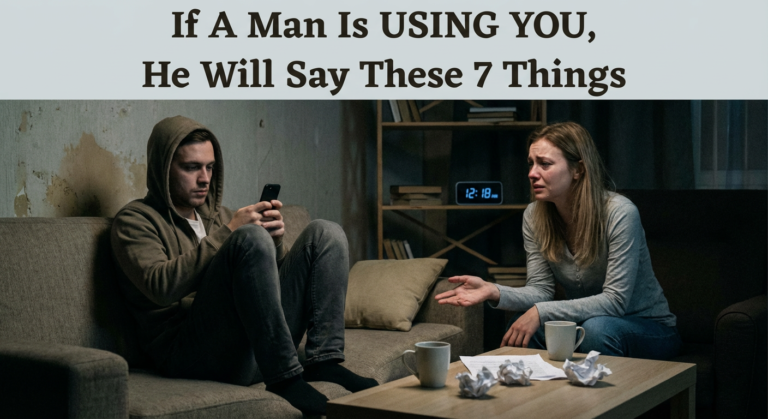
Sarah thought she’d finally found someone special. After three months of dating Marcus, she felt like they had something real. He was charming, attentive when they were together, and the chemistry was undeniable. But there was something nagging at her… a feeling she kept pushing down because she wanted so badly for it to work.
Then one night, after she’d mentioned wanting to meet his friends, he said it: “I’m just not ready to put labels on this yet. Let’s keep things fun and see where it goes.”
It was the fourth time he’d said something like that. Each time, the words were slightly different, but the message was the same: He wanted her around, but only on his terms. Only when it was convenient. Only for what she could give him.
She’d heard similar phrases before: “You’re so different from other girls… you don’t pressure me.” “I’m just in a weird place right now.” “You know I care about you, but I need to focus on my career.”
Looking back now, Sarah can see it clearly. He wasn’t building a relationship with her. He was managing her expectations while taking whatever he wanted.
Why This Matters More Than Ever
In today’s dating landscape, where commitment seems increasingly rare and “situationships” have become normalized, knowing when you’re being used is critical information for your emotional health and future.
The painful truth is that some men are skilled at keeping you around… giving you just enough attention, just enough hope, just enough emotional connection… while having no intention of truly committing to you or prioritizing your needs.
They’re not necessarily evil or even consciously malicious. Many genuinely believe they’re being honest by throwing out ambiguous phrases that technically tell you where they stand. But these phrases are often carefully chosen to keep you invested while they maintain maximum freedom.
The Cost of Missing the Signs
When you’re being used, you’re not just wasting time… though that’s certainly part of it. You’re also:
- Investing emotional energy in someone who’s not equally invested
- Missing opportunities with people who would genuinely value you
- Damaging your self-worth by accepting breadcrumbs instead of a full meal
- Building trauma patterns that affect future relationships
- Depleting your capacity for trust in healthy partners
Dr. Kristin Neff’s research on self-compassion found that women who ignore red flags and stay in exploitative situations often develop deep shame… not just about the relationship, but about themselves for “allowing” it to happen.
The truth is, manipulation works precisely because it’s designed to be hard to see. These men aren’t twirling mustaches and cackling about their evil plans. They’re using language that sounds reasonable, even caring, but is actually designed to serve their interests while keeping you hopeful.
The Pattern You Need to Recognize
Here’s what you need to understand: Men who are using you employ specific linguistic patterns. They use certain phrases repeatedly… phrases that sound like they’re being vulnerable or honest, but are actually maintaining plausible deniability while keeping you available.
These phrases serve multiple purposes:
- They keep you from demanding more
- They make you feel like you’re being “too much” if you ask for commitment
- They give him an out if you ever confront him
- They make you responsible for managing your own expectations
- They allow him to continue taking what he wants without reciprocating
What You’ll Learn
In this article, I’m going to break down the seven specific things men say when they’re using you. Not to make you paranoid or distrustful, but to give you the clarity you deserve.
For each phrase, you’ll learn:
- What he really means when he says it
- Why this phrase is a manipulation tactic
- Real examples of how it plays out
- The psychology behind why it works
- How to respond when you hear it
- What actions (not words) would accompany this phrase if he actually meant well
More importantly, you’ll learn how to distinguish between a man who’s genuinely navigating complexity in a relationship and a man who’s deliberately keeping you in limbo for his benefit.
By the end of this article, you’ll have the tools to recognize when you’re being used, the confidence to walk away, and the clarity to demand better for yourself.
Because you deserve someone who doesn’t need carefully crafted phrases to manage your expectations. You deserve someone whose actions match their words, and whose words are “I want to be with you” rather than elaborate justifications for why they can’t commit.
Let’s decode the seven things men say when they’re using you.
Table of Contents
Understanding the Psychology of Being Used
Before we dive into the specific phrases, you need to understand the psychological mechanisms that make being used so effective and why these particular phrases work so well.
The Investment Principle
There’s a phenomenon in behavioral psychology called the sunk cost fallacy… the tendency to continue investing in something because you’ve already invested so much, even when it’s clearly not working.
Men who use women leverage this principle. The longer you stay, the harder it becomes to leave because you’ve invested time, emotion, energy, and hope. Each phrase he uses is designed to keep you investing just a little bit longer.
The Intermittent Reinforcement Trap
Psychologist B.F. Skinner discovered that intermittent reinforcement… rewards given unpredictably… creates the strongest behavioral conditioning.
When a man gives you just enough attention, affection, or hope at unpredictable intervals, your brain becomes addicted to chasing those moments. The occasional great date, the sporadic sweet text, the rare vulnerable conversation… these keep you hooked more effectively than consistent behavior would.
His phrases often come right after he’s given you a breadcrumb of hope, reinforcing your tolerance for the situation.
The Cognitive Dissonance Effect
Cognitive dissonance is the mental discomfort we feel when our beliefs don’t match reality. When you want to believe he cares about you, but his actions suggest otherwise, your brain works overtime to resolve this conflict.
These phrases help you resolve the dissonance in his favor: “He’s not using me… he’s just scared of commitment.” “He’s not being selfish… he’s just being honest about where he is.”
The phrases give you a narrative that allows you to stay without admitting you’re being used.
The Empathy Exploitation
Women are typically socialized to be understanding, patient, and empathetic. Men who use women exploit these qualities.
When he says he’s “working through things” or “not ready,” your empathy kicks in. You want to be supportive. You don’t want to be the “demanding” girlfriend. You don’t want to add pressure to someone who’s “struggling.”
These phrases are designed to trigger your empathy and make you feel guilty for having needs.
The Hope Maintenance Strategy
The most crucial element: These phrases are designed to maintain just enough hope to keep you around.
He’s not saying “I will never commit to you.” He’s saying “not now” or “not yet” or “I’m working on it.” This keeps the door open in your mind. You think if you’re just patient enough, understanding enough, low-maintenance enough, eventually he’ll be ready.
But here’s the truth: If a man is using you, there is no “eventually.” The phrases are designed to perpetually postpone that eventuality while he continues benefiting from the arrangement.
Why Smart Women Fall for This
Before we continue, let’s be clear: Falling for these tactics doesn’t make you stupid, desperate, or weak.
These manipulation strategies work because:
- They exploit normal human psychology
- They’re delivered by someone you have feelings for
- They often contain kernels of truth that make them believable
- Society has trained women to be patient and understanding
- You want to believe the best in people
- The alternative… accepting you’re being used… is painful
Recognizing the tactics is the first step to protecting yourself.
Phrase #1: “I’m Just Not Ready for a Relationship Right Now”
This is perhaps the most common phrase men use when they want to keep you around without committing. It sounds honest, even vulnerable. But let’s decode what’s really happening.
What He’s Actually Saying
Translation: “I’m not ready for a relationship with you, but I’m happy to accept the benefits you’re offering… emotional support, physical intimacy, companionship… without giving you the commitment, security, or prioritization you deserve.”
Here’s the critical distinction: A man who isn’t ready for a relationship at all would step back from ALL relationship-like activities. He wouldn’t be:
- Sleeping with you regularly
- Texting you good morning
- Sharing emotional intimacy
- Spending weekends together
- Acting like your boyfriend in private
If he’s doing relationship things while saying he’s “not ready for a relationship,” what he means is he’s not ready to give you the title, security, and commitment that would come with officially being in a relationship.
Why This Phrase Works So Well
This phrase is brilliant manipulation because:
1. It sounds reasonable
Who can argue with someone not being ready? It seems like you’d be pushy or demanding to push back against it.
2. It makes you the bad guy if you object
If you say “but we’re basically in a relationship,” you look like you’re pressuring him. He can position himself as the honest one and you as the needy one.
3. It keeps the timeline ambiguous
“Not right now” implies maybe later. This keeps you hoping and waiting without any actual commitment to change.
4. It exempts him from relationship responsibilities
He gets relationship benefits without having to meet your family, integrate you into his life, prioritize you, or be accountable to you as a partner.
Real Story: The Perpetual “Not Right Now”
Jessica dated Tom for nearly two years. From month three onward, whenever she’d bring up defining the relationship, he’d say: “I’m just not ready for a relationship right now. My career is crazy, and I don’t want to be a bad boyfriend to you.”
Yet he saw her 3-4 times per week. They went on vacations together. They had deep conversations. They were functionally in a relationship in every way except the ways that required him to actually commit or prioritize her.
When Jessica finally ended things, Tom was in a committed relationship within three months. He wasn’t “not ready for a relationship.” He just wasn’t willing to commit to Jessica.
How to Respond
If you hear this phrase, here’s what to say:
“I appreciate your honesty. I’m looking for a committed relationship, and if you’re not ready to offer that, I need to move on and find someone who is. I wish you the best.”
Then actually follow through. Don’t let him convince you to stay in limbo.
The Actions Test
A man who genuinely isn’t ready for a relationship would:
- Step back from relationship-like behavior rather than enjoying the benefits
- Be clear about timeline or circumstances that need to change
- Encourage you to date others rather than getting jealous
- Not introduce you to important people or integrate you into his life
- Be consistent in maintaining boundaries, not hot-and-cold
If he’s saying he’s not ready but acting like your boyfriend, he’s using you.
What You Need to Know
“Not ready for a relationship” should mean “not engaging in relationship behavior.”
If he’s engaging in relationship behavior while refusing the commitment, he’s having his cake and eating it too… at your expense.
The right man won’t need this phrase because when a man is ready and you’re the right person, he pursues a relationship, even if the timing is imperfect.
Phrase #2: “You’re Different From Other Girls… You Don’t Pressure Me”
This phrase sounds like a compliment. It feels like he’s praising you for being understanding and low-maintenance. In reality, it’s a manipulation tactic designed to make you afraid to ask for what you need.
What He’s Actually Saying
Translation: “I’ve categorized you as someone who won’t hold me accountable or demand commitment, and I’m rewarding you with this ‘compliment’ to ensure you continue to ask for nothing while I take everything I want.”
This phrase is particularly insidious because it:
- Makes you feel special and different
- Creates an identity you feel you need to maintain
- Turns asking for commitment into “being like other girls” (negative)
- Uses your desire to be valued against you
The Psychological Manipulation
This is a compliance technique. By praising you for not having standards or expressing needs, he’s training you to continue suppressing those needs.
It’s similar to how a parent might say “You’re my good child… you never complain” to a kid, subtly pressuring them to never voice discomfort to maintain that “good” identity.
He’s creating a dynamic where having needs = losing your special status.
Why Women Fall for This
This phrase is effective because:
1. It taps into “not like other girls” conditioning
Many women have been taught that being “low-maintenance” and “chill” makes them more desirable. This phrase reinforces that conditioning.
2. It creates fear of being “too much”
If you’re praised for not pressuring, asking for commitment becomes scary… what if you lose this special status?
3. It feels like intimacy
Being told you’re different feels like he sees something special in you, creating false intimacy.
4. It triggers competitiveness
By contrasting you with “other girls,” it makes you want to prove you’re better than them by continuing to demand nothing.
Real Story: The “Cool Girl” Trap
Maria dated Alex for eight months. He would regularly tell her, “You’re so different from my exes. They were always nagging me about where the relationship was going. You just enjoy the moment.”
Maria felt proud of this. She saw it as evidence of her maturity and confidence. So when she’d start to feel uncertain about their lack of commitment, she’d suppress those feelings to maintain her “cool girl” status.
Eventually, Alex started seeing someone else… and was engaged within a year. When Maria confronted him, he said, “I thought you were happy with how things were. You never said you wanted more.”
She’d been so busy being the “different” girl who didn’t pressure him that she’d never advocated for her actual needs.
The Reality Check
Here’s what you need to understand: If asking for basic relationship security and commitment makes you “like other girls,” then being “different” means accepting less than you deserve.
The right man doesn’t need you to be “different” by having no standards. The right man appreciates a woman who knows her worth and clearly communicates her needs.
How to Respond
If you hear this phrase, say:
“I appreciate that you feel comfortable with me. But if wanting clarity and commitment makes me ‘like other girls,’ then I guess I am like other girls… because those are reasonable things to want. Are you willing to offer them?”
Watch his reaction carefully. If he backpedals, gets defensive, or tries to make you feel demanding, you have your answer about his intentions.
The Actions Test
A man who genuinely values you being “different” would:
- Value your other qualities beyond your willingness to ask for nothing
- Not use it as a reason to avoid commitment
- Appreciate directness when you do express needs
- Not compare you to exes to manipulate your behavior
- Want you to be authentic, not perform “low-maintenance”
If “you’re different” only applies when you’re asking for nothing, he’s training you to stay silent about your needs.
“When a man praises you for not having standards, he’s not complimenting you… he’s conditioning you to keep those standards low.” … Relationship expert
Phrase #3: “I Don’t Want to Put Labels on This”
The anti-label stance might sound modern and evolved, but when it’s being used strategically, it’s another way to get relationship benefits without relationship commitment.
What He’s Actually Saying
Translation: “I want to keep my options open and maintain plausible deniability about what we are, so I’m not accountable to you as a partner, but I still want you to act like my girlfriend when it’s convenient for me.”
Labels aren’t just words… they’re commitments, boundaries, and public declarations. When someone refuses labels, they’re refusing those things.
Why the Anti-Label Position Is Often Manipulation
Let’s be clear: There are legitimate reasons to take time before labeling a relationship. Early dating should have some ambiguity while people figure out compatibility.
But we’re talking about something different: Prolonged refusal to define the relationship while maintaining relationship-level intimacy and investment.
This becomes manipulation when:
- You’ve been seeing each other for months
- You’re emotionally and physically intimate
- You’re integrated into each other’s daily lives
- You’re exclusive in practice (or he expects you to be)
- But he won’t publicly claim you or commit to you
The Strategic Advantage of No Labels
Refusing labels gives him several benefits:
1. Freedom without honesty
He can claim “we’re not in a relationship” if someone asks, while still getting relationship benefits from you.
2. No accountability
Without the label, he can’t be a “bad boyfriend” because technically he’s not your boyfriend.
3. Keeping options open
No label means he’s not “cheating” if he pursues someone else, even though you thought you were exclusive.
4. Control
He controls when and if the relationship progresses, while you wait in limbo.
Real Story: The Perpetual “What Are We?”
Nicole and James spent nearly every day together for six months. They’d sleep over at each other’s places, meet for lunch during work, text constantly, and share deeply personal things.
But whenever Nicole would try to define the relationship, James would say, “I don’t want to put labels on this. Labels ruin things. Let’s just enjoy what we have.”
What they “had” was everything a relationship provided James… companionship, emotional support, physical intimacy, consistent dates… without any of the commitment, accountability, or security that would have benefited Nicole.
When James started dating someone else, Nicole was devastated. His response? “We were never exclusive. We never put labels on it.”
The lack of labels allowed him to avoid being accountable to her while enjoying six months of her investment.
The Double Standard
Notice that men who refuse labels for months often move very quickly to label their next relationship when they meet someone they actually want to commit to.
The issue isn’t that he hates labels. The issue is he doesn’t want to label his relationship with you.
How to Respond
If you hear this phrase repeatedly, say:
“I understand not wanting to rush labels early on. But we’ve been seeing each other for [timeframe], and I need clarity about what this is and where it’s going. I’m looking for a committed relationship. If that’s not what you want, I need to know so I can make decisions about my own life.”
Set a boundary: “I’m willing to give this [specific timeframe, like one month] to see if we’re moving toward commitment. If we’re not, I need to move on.”
The Actions Test
Someone who genuinely values connection over labels would:
- Still be exclusive and committed even without formal labels
- Not use “no labels” as a reason to avoid commitment
- Be comfortable with you telling friends/family about them
- Progress naturally toward more defined commitment over time
- Show commitment through actions, even if they’re cautious about words
If he’s using “no labels” to avoid commitment altogether rather than just avoid rushing language, he’s using you.
What You Need to Know
After a reasonable getting-to-know-you period (typically 2-3 months of consistent dating), refusing to define the relationship is a choice to keep you in limbo.
The right man won’t hide behind “no labels.” He’ll want to claim you publicly and make his commitment to you clear, label or not.
Phrase #4: “I’m Still Getting Over My Ex”
This phrase sounds vulnerable and honest. When used strategically, it’s an excuse to keep you available while not fully committing.
What He’s Actually Saying
Translation: “I’m going to use my past relationship as a shield against accountability in this one. I’ll give you just enough to keep you around, but I can always blame my emotional unavailability on my ex instead of my choices.”
When It’s Legitimate vs. When It’s Manipulation
Legitimate scenario:
He genuinely isn’t ready to date, so he’s not dating at all… not pursuing new relationships, not getting emotionally or physically intimate, taking real time to heal.
Manipulation scenario:
He’s actively dating you, sleeping with you, spending significant time with you, creating relationship-like dynamics… but uses “still getting over my ex” as an excuse whenever you need more from him.
The key difference: Is he actually taking space to heal, or is he using “healing” as an excuse to take what he wants from you without reciprocating?
Why This Phrase Works
This phrase is effective manipulation because:
1. It triggers your empathy
You want to be understanding of his pain and supportive of his healing.
2. It makes you feel selfish for having needs
How can you ask for commitment when he’s “still struggling”? Your needs seem petty in comparison.
3. It creates indefinite timeline
There’s no clear endpoint for “getting over” someone, so you’re stuck in permanent limbo.
4. It positions him as the victim
Even though he’s the one using you, he’s framed as the one who’s suffering.
5. It prevents you from leaving
Leaving feels like abandoning someone who’s vulnerable, creating guilt.
Real Story: The Perpetual Healing Process
Lauren dated Chris for over a year. Whenever she’d want to take the next step… meet his family, make plans further than a week out, talk about being official… he’d say: “I want to, but I’m still working through what happened with my ex. I don’t want to bring that baggage into what we have.”
Yet he had no problem with:
- Regular sleepovers
- Emotional intimacy and deep conversations
- Physical relationship
- Spending most weekends together
- Meeting her friends (but not introducing her to his)
He was healed enough to take everything a relationship offered but not healed enough to offer her commitment or security.
Two months after Lauren finally ended things, Chris was in a new, labeled relationship. Apparently, he’d healed quite quickly.
The Selective Unavailability Pattern
Here’s what’s telling: When a man is using this excuse, he’s usually available for the things that benefit him (sex, companionship, emotional support) but unavailable for the things that would benefit you (commitment, accountability, integration into his life).
If he’s healed enough to enjoy a relationship’s benefits but not healed enough to provide its securities, he’s managing your expectations, not his healing.
How to Respond
If you hear this phrase, say:
“I understand you’re working through things. But if you’re not ready to fully invest in a relationship, it’s not fair to keep me in limbo. I need to know: Is there a timeframe you’re working toward, or do you need space to heal without dating anyone?”
Watch what he does:
- Does he give you a genuine answer and either commit to a timeline or step back completely?
- Or does he give you just enough reassurance to keep you waiting indefinitely?
The Actions Test
Someone genuinely healing from a past relationship would:
- Not pursue new relationship-level intimacy until they’re ready
- Be in therapy or actively working on themselves
- Take real space rather than keeping you in a gray area
- Be honest about timeline or lack thereof
- Not use past hurt as permanent shield against current accountability
If he’s citing his ex as a reason not to commit while actively maintaining a relationship-like situation with you, he’s using you as a comfort zone without offering commitment.
Phrase #5: “I Don’t Want to Ruin What We Have”
This sounds protective and sweet… like he values the connection so much he doesn’t want to risk it. In reality, it’s often a way to avoid giving you more while keeping what he currently has.
What He’s Actually Saying
Translation: “The current situation works great for me… I get what I want without having to commit or step up. If we make this ‘official,’ you might expect more from me, and I don’t want to give that. So let’s keep things exactly as they are indefinitely.”
This phrase is designed to make you believe that wanting progression would destroy something special, when the truth is he just doesn’t want to give you more.
The Paradox of This Phrase
Think about what he’s actually saying: “Our connection is so special that we should never deepen it or make it more secure.”
That’s backwards.
When something is truly special, you want to protect it, commit to it, and build on it. You don’t leave it in perpetual limbo because you’re afraid of “ruining” it.
Why This Phrase Works
1. It flips the script
Instead of him being the one refusing to commit, you become the potential threat to something good.
2. It makes progression seem dangerous
It creates fear that wanting more will destroy what you have, so you stay quiet.
3. It sounds like he values the relationship
The phrase makes it seem like he’s protecting something precious, when really he’s protecting his freedom to offer you nothing more.
4. It preys on your fear of loss
You become afraid that pushing for more will mean losing even what you currently have.
Real Story: The Frozen Relationship
Emma and Tyler had been seeing each other for eight months. They were exclusive, spent most nights together, shared their lives… but he wouldn’t meet her family, wouldn’t discuss future plans, wouldn’t even call her his girlfriend.
Every time Emma brought it up, Tyler would say: “What we have is so special. I don’t want to ruin it by putting pressure on it or forcing it to be something it’s not. Let’s just enjoy what we have.”
What “what they had” meant: Tyler got a girlfriend experience without girlfriend responsibilities. Emma got uncertainty and no path forward.
When Emma finally insisted on progression or ending things, Tyler chose to end it. Turns out “what they had” wasn’t so special that he’d commit to keep it. He just wanted to keep it exactly as it was… convenient for him.
The Fear Tactic
This phrase is a fear-based manipulation. It makes you afraid that:
- Wanting commitment will push him away
- You’re being too demanding
- Progression will somehow make things worse
- You should be grateful for what you have and not ask for more
Real relationships grow and deepen. Artificial ones stay frozen in place to serve someone’s interests.
How to Respond
If you hear this phrase, say:
“I understand you value what we have. I do too. But healthy relationships grow and progress. If you’re afraid that committing to me would ‘ruin’ us, that tells me you’re not as invested as I am. I need a relationship that moves forward, not one that stays frozen to protect your comfort.”
The Actions Test
Someone who genuinely fears “ruining” something good would:
- Work through that fear rather than using it as a permanent excuse
- Seek to understand why progression feels threatening
- Value your needs as much as their comfort
- Be willing to grow even when growth feels scary
- Recognize that stagnation is its own form of ruin
If he’s using “don’t want to ruin it” as a permanent shield against progression, he’s keeping you in a holding pattern that serves only him.
“A man who’s afraid of ‘ruining’ what you have by committing isn’t protecting the relationship… he’s protecting his ability to give you less than you deserve.” … Dating coach
Phrase #6: “You Knew What This Was From the Beginning”
This phrase is gaslighting at its finest. It’s used when you finally ask for more and he wants to make you feel like you’re changing the rules when you’re simply recognizing you deserve better.
What He’s Actually Saying
Translation: “I’m going to use your initial willingness to go along with a casual situation against you now that you’ve developed feelings or realized you want more. I’ll frame your completely reasonable evolution as you breaking an agreement, so I don’t have to acknowledge that I’ve been using you all along.”
This phrase is designed to make you feel:
- Like you’re the problem
- Like you’re breaking an agreement
- Like you have no right to want more
- Like your feelings developing is your fault
The “Agreement” That Never Was
Here’s what typically happens:
Early on: He says something vague like “let’s take it slow” or “I’m not looking for anything serious right now,” and you agree because:
- You’re genuinely okay with casual initially
- You think it might develop into more
- You don’t want to seem “too much”
- You’re hoping to prove you’re different
Months later: You’ve developed genuine feelings. You’ve been functioning like a couple. You reasonably want the relationship to progress.
His response: “You knew what this was from the beginning.”
The problem: You agreed to see where things went, not to permanently accept breadcrumbs while he gets relationship benefits.
Why This Is Gaslighting
Gaslighting is a manipulation tactic where someone makes you question your own reality or sanity.
This phrase is gaslighting because:
1. It rewrites history
It suggests there was a clear agreement to stay casual forever, when likely there was just an initial conversation about taking things slow.
2. It denies your right to evolve
Feelings develop. Needs change. In any genuine relationship, people’s feelings and expectations evolve… that’s normal and healthy.
3. It makes you responsible for being used
It frames him using you as something you consented to, making you feel responsible for your own mistreatment.
4. It avoids his accountability
Instead of acknowledging that he’s been taking advantage of your patience, he makes it your fault for “changing the rules.”
Real Story: The Rewritten History
Sophia started seeing James casually. On their second date, he mentioned he’d recently gotten out of a relationship and “wanted to take things slow.” Sophia agreed… she wasn’t looking to rush either.
Six months later, they were seeing each other 4-5 times per week, sleeping over regularly, sharing deeply personal things, being each other’s primary emotional support.
When Sophia said she wanted to be official and exclusive, James said: “You knew from the start I didn’t want anything serious. You agreed to keep things casual. I’ve been honest from day one.”
But “taking it slow initially” isn’t the same as agreeing to stay in limbo forever. James had rewritten history to make Sophia’s completely reasonable desire for progression seem like she was breaking an agreement.
The Evolution of Reasonable Expectations
Here’s the truth: It’s completely normal and healthy for your expectations to evolve as a relationship develops.
Initial casual agreement does not equal permanent casual arrangement.
If you’ve been:
- Seeing each other exclusively for months
- Emotionally intimate and supportive
- Integrated into daily lives
- Acting like partners in every way
You have every right to expect the relationship to progress. That’s not changing the rules… that’s the natural evolution of healthy relationships.
How to Respond
If you hear this phrase, say:
“When we started, I was open to seeing where things went. They’ve gone to a place where I’ve developed real feelings and want a real relationship. That’s a normal evolution. If you don’t want the same thing, that’s your choice… but don’t make me feel wrong for having feelings or wanting more after months of being together. I’m not changing the rules; I’m recognizing what I deserve.”
Then hold your boundary:
“I want a committed relationship. If you don’t, I need to walk away and find someone who does.”
The Actions Test
Someone who’s being genuine about the situation would:
- Acknowledge that feelings and needs naturally evolve
- Take responsibility for how the situation has developed
- Not make you feel guilty for wanting more
- Either step up or step back honestly
- Not use your initial agreement against your current reasonable needs
If he’s using “you knew what this was” to avoid accountability for using you, he’s gaslighting you to maintain the arrangement that serves him.
Phrase #7: “I Care About You Too Much to Make Promises I Can’t Keep”
This sounds noble and self-aware. In practice, it’s often a way to avoid making any promises at all while continuing to benefit from your presence.
What He’s Actually Saying
Translation: “I’m going to frame my unwillingness to commit as me protecting you, so you can’t be mad at me for refusing to give you what you need. I’ll sound caring and honest while actually keeping you in limbo indefinitely.”
This phrase makes him sound like the good guy… so thoughtful, so protective, so honest… when really he’s just refusing to commit while making it sound like he’s doing you a favor.
The False Nobility
Let’s break down what’s happening here:
What he’s claiming: “I’m so honest and protective of you that I won’t make promises unless I’m 100% certain.”
What he’s actually doing: Using uncertainty as an excuse to never make any promises while continuing to enjoy relationship benefits.
Here’s the problem: Relationships require some level of faith and commitment even with uncertainty. No one can predict the future with 100% certainty.
When someone uses “can’t make promises I can’t keep” as a reason to make NO promises, they’re avoiding commitment while sounding reasonable.
Why This Phrase Is Particularly Effective
1. It sounds mature and thoughtful
It makes him seem self-aware and considerate of your feelings.
2. It’s hard to argue against
How can you fault someone for being “too honest” to make false promises?
3. It makes you seem unreasonable if you object
If you push back, you look like you’re asking for false promises.
4. It creates perpetual limbo
He never has to commit because he can always claim he can’t promise anything yet.
5. It frames avoidance as care
He’s not refusing to meet your needs… he’s “protecting” you. It’s manipulation disguised as nobility.
Real Story: The Perpetual Protection
Rachel dated Kevin for nearly a year. Whenever she’d bring up next steps… meeting family, discussing future, becoming official… Kevin would say:
“I care about you so much, and that’s exactly why I can’t make promises I’m not sure I can keep. I don’t want to hurt you by committing and then realizing I can’t follow through. I’m just being honest.”
What he was really saying: “I want to keep dating you and getting what I need from you, but I don’t want to actually commit or be accountable to you.”
What made it particularly painful for Rachel was that his refusal to commit was framed as care for her, making her feel guilty for wanting more.
When Rachel finally ended things, Kevin was “officially” dating someone new within two months. Apparently he figured out how to make promises after all.
The Commitment Avoidance Pattern
Notice the pattern: Men who use this phrase often have no problem making plans and commitments in other areas of life… careers, friendships, purchases, trips… where they can’t guarantee outcomes either.
But somehow when it comes to committing to you, suddenly certainty becomes the standard.
The issue isn’t that he can’t handle uncertainty. The issue is he doesn’t want to commit to you.
The Reality of Relationships
Here’s what healthy people understand: All relationships involve some uncertainty and risk.
You can never be 100% certain of:
- Exactly how you’ll feel in five years
- Whether circumstances will change
- Whether challenges will arise
But commitment means choosing someone anyway… choosing to work through uncertainty together, choosing to build despite not knowing every outcome.
When someone refuses to commit because they “can’t make promises,” they’re essentially saying they’ll never commit to anyone (which is fine), or they’re using it as an excuse with you specifically (which means you’re not their person).
How to Respond
If you hear this phrase, say:
“I appreciate honesty, but what you’re describing is true for every relationship… no one can guarantee the future. What I need isn’t guarantees; I need someone willing to commit and work through uncertainty together. If you’re not willing to do that with me after [timeframe], then we want different things.”
Set a clear boundary:
“I’m not asking for promises about forever. I’m asking for commitment to be in a relationship together right now. If you can’t give me that, I need to walk away.”
The Actions Test
Someone who’s genuinely being protective would:
- Make the commitments they CAN make (exclusivity, calling you their partner, etc.)
- Work toward greater certainty rather than using uncertainty as permanent excuse
- Show commitment through actions even while being honest about uncertainties
- Not use “protecting you” as reason to meet none of your needs
- Either commit or step back entirely rather than keeping you in limbo
If he’s using “protecting you from broken promises” as a reason to make NO promises while continuing to take from the relationship, he’s using you.
The Common Thread: What All These Phrases Do
Now that we’ve examined each phrase individually, let’s look at what they all have in common and why they work so effectively as manipulation tactics.
They All Create Plausible Deniability
Every single phrase gives him an out if you ever confront him:
- “I told you I wasn’t ready for a relationship”
- “I said I didn’t want labels”
- “You knew I was getting over my ex”
- “I explained from the beginning what this was”
He can claim he was honest even though his actions told a completely different story.
They All Shift Responsibility to You
Notice how each phrase makes you responsible for managing your own expectations:
- YOU’RE the one who needs to understand he’s not ready
- YOU’RE the one who agreed to no labels
- YOU’RE the one who should be patient with his healing
- YOU’RE the one who knew what this was
His using you becomes your fault for not protecting yourself better.
They All Buy Him More Time
Every phrase is designed to keep you waiting just a little bit longer:
- Maybe he’ll be ready soon
- Maybe labels will come eventually
- Maybe he’ll get over his ex
- Maybe things will change
The “maybe” keeps you hoping and investing while he continues getting what he wants.
They All Sound Reasonable
This is crucial: Every phrase sounds like honest communication.
That’s what makes them so effective. They’re not obviously manipulative. They masquerade as transparency, self-awareness, or consideration.
This is why smart, confident women fall for them… they SOUND like someone being genuine.
They All Maintain the Status Quo That Serves Him
Most importantly: Every single phrase is designed to keep things exactly as they are… with him getting relationship benefits without relationship commitment.
None of these phrases are about finding a solution or working toward something better. They’re all about justifying why things should stay the same indefinitely.
Comparison Table: Healthy Communication vs. Manipulation
| Manipulative Phrases | Healthy Communication |
|---|---|
| “I’m not ready for a relationship right now” (while acting like boyfriend) | “I’m not ready to date seriously, so I need to step back from dating entirely” |
| “You’re different… you don’t pressure me” | “I appreciate your patience, AND I want to give you the commitment you deserve” |
| “I don’t want labels” (indefinitely) | “I want to take time to build foundation, but I’m working toward commitment” |
| “I’m still getting over my ex” (while dating you) | “I need time to heal, so I shouldn’t be dating right now” |
| “I don’t want to ruin what we have” | “I value what we have, so I want to deepen and protect it through commitment” |
| “You knew what this was” | “I recognize your feelings have evolved. Let’s talk about what we both need now” |
| “I care too much to make promises” | “I care about you, so I want to commit even though the future is uncertain” |
The difference is clear: Manipulative phrases maintain beneficial-to-him limbo. Healthy communication works toward resolution, either by committing or ending things cleanly.
How to Tell If He’s Genuinely Confused or Deliberately Using You
Some men genuinely struggle with commitment due to fear, past trauma, or confusion about their feelings. How do you distinguish between someone working through genuine issues and someone deliberately using you?
Look at His Actions, Not His Words
This is the most important principle: Actions reveal truth; words can deceive.
Someone genuinely working through issues:
- Actions match words (if he says he needs space, he actually takes space rather than continuing to date you)
- Invests in personal growth (therapy, self-reflection, working on himself)
- Shows remorse when he recognizes he’s hurting you
- Makes progress toward resolution over time
- Respects your boundaries and needs
Someone deliberately using you:
- Actions contradict words (says he’s not ready but acts like your boyfriend)
- No evidence of working on himself or the issues he claims are holding him back
- Gets defensive when you express hurt or needs
- No progression over months or years
- Violates boundaries and pushes back on your needs
The Timeline Test
Genuine confusion/fear:
- Weeks to a few months of uncertainty while working through it
- Visible progress in that time
- Active problem-solving toward resolution
- Communication about the process
Deliberate using:
- Months to years of the same excuses
- No meaningful change or progress
- Circular conversations that go nowhere
- Same phrases on repeat without evolution
If you’re having the same conversation about where the relationship is going every few months with no progression, you’re being used.
The Exclusivity Test
Genuine situation:
- If he’s truly not ready, he’s not pursuing anyone (not you, not others)
- He encourages you to date others if he can’t offer commitment
- He steps back from intimate situations until he’s ready
Using situation:
- He wants you to be exclusive while he remains uncommitted
- He gets jealous or controlling if you show interest in others
- He maintains intimate connection while refusing commitment
If he wants you to act like his girlfriend but won’t commit to being your boyfriend, he’s using you.
The Integration Test
Genuine interest (even with fear):
- Eventually introduces you to important people
- Includes you in his life gradually
- Makes room for you in his world
- Future plans naturally include you
Using:
- Keeps you separate from the rest of his life
- No integration into friend group, family, etc.
- Compartmentalizes you
- No future planning that includes you
If after months of dating you haven’t met anyone important in his life, you’re probably being used.
The Respect Test
Genuine person working through issues:
- Respects your timeline and needs
- Understands if you need to walk away
- Doesn’t manipulate you into staying
- Takes accountability for impact on you
Someone using you:
- Manipulates you into waiting
- Makes you feel guilty for having needs
- Uses tactics to keep you around
- Blames you for being hurt
The Growth Test
Genuine working-through:
- Actively seeking help (therapy, books, mentors)
- Self-reflection and growth
- Changes in behavior over time
- Takes feedback seriously
Deliberate using:
- Same issues, no solutions
- Talks about changing but doesn’t
- Defensive about feedback
- No investment in actual growth
Trust Your Gut
Finally, trust your instincts.
If something feels off, it probably is. If you feel used, you probably are being used.
Women’s intuition about being used is usually right. We tend to doubt ourselves because we want to believe the best, but your gut knows what your heart doesn’t want to admit.
Ask yourself:
- Do I feel valued and prioritized?
- Do I feel secure in this relationship?
- Does he show up for me the way I show up for him?
- Am I getting what I need?
- Do his actions match his words?
If the answer to most of these is no, you’re being used… regardless of his explanations.
What to Do When You Recognize These Phrases
You’ve been reading this article and recognizing phrases you’ve heard. Maybe your stomach has been sinking with each section. What do you actually DO with this information?
Step 1: Acknowledge the Reality
First, stop making excuses for him.
Stop telling yourself:
- “But he has good reasons”
- “He’s just scared of commitment”
- “If I’m just patient enough…”
- “He does care, he’s just confused”
If a man wanted to commit to you, he would. Fear, confusion, and past issues don’t prevent men from committing to women they truly want to be with. They work through those things.
Acknowledge that you’re being used. This is painful, but it’s necessary for moving forward.
Step 2: Have One Clear Conversation
Before you act, have one final, clear conversation:
“I’ve been thinking about our relationship, and I realize I need more than what we have. I need [specific things: commitment, exclusivity, labels, integration into your life, etc.]. I’m not willing to continue in limbo. Are you willing and able to give me what I need?”
Important:
- Be specific about what you need
- Set a clear boundary about what you’re no longer willing to accept
- Listen to his response (words AND actions)
- Don’t let him deflect with the phrases you now recognize
Step 3: Watch What He Does, Not What He Says
After this conversation, pay attention to actions:
If he actually wants you:
- He’ll make real changes quickly
- He’ll meet your needs without extensive convincing
- You’ll see immediate behavioral shift
- He’ll prioritize the relationship
If he’s just trying to keep you around:
- He’ll say the right things but nothing changes
- He’ll ask for more time without any plan or timeline
- He’ll make minimal effort or temporary changes that revert
- He’ll use the same phrases to buy more time
Give him a week, maybe two, to show you through actions whether he’s willing to step up. Not months. Not “let’s see.” A week.
Step 4: Be Willing to Walk Away
This is the hardest but most crucial step: You have to actually be willing to leave.
Here’s the truth: As long as he knows you’ll stay regardless, he has no reason to change.
Why would he give you commitment when he’s getting everything he wants without it?
You must value yourself enough to walk away from someone who won’t give you what you need.
This means:
- Actually ending the relationship if he doesn’t step up
- Blocking contact so he can’t breadcrumb you back
- Not being available for “friendship” or “staying in touch”
- Not accepting minimal changes that don’t actually meet your needs
Step 5: Don’t Fall for the Panic Response
Many men who are using you will panic when you actually start to leave… not because they realized they love you, but because they’re losing a comfortable situation.
The panic response looks like:
- Suddenly promising to change
- Making grand gestures
- Saying everything you’ve wanted to hear
- Temporary behavior change
This is often just manipulation to get you to stay so things can go back to how they were.
How to tell if it’s genuine vs. panic:
- Genuine change is sustained (months, not days)
- Genuine change comes with no resentment
- Genuine change includes accountability for past behavior
- Genuine change happens even when you’re not threatening to leave
Don’t fall for panic-driven temporary changes. Wait and watch if he maintains it.
Step 6: Invest in Your Own Healing
Whether you leave or he steps up, invest in your own healing:
- Process why you accepted less than you deserved
- Work on boundaries so this doesn’t happen again
- Rebuild self-worth that got damaged
- Understand your patterns in relationships
Consider:
- Therapy or counseling
- Journaling about the experience
- Trusted friends for support
- Books on boundaries and self-worth
- Time focusing on yourself and your life
You can’t change him, but you can change what you’ll accept going forward.
Step 7: Recognize Your Worth
Finally, internalize this truth:
You deserve someone who doesn’t need carefully crafted phrases to avoid committing to you. You deserve someone whose YES is clear, enthusiastic, and backed by action.
You deserve:
- Someone who claims you proudly
- Someone who commits without endless excuses
- Someone whose actions match their words
- Someone who meets your needs without extensive convincing
- Someone who sees being with you as a privilege, not a sacrifice
Don’t settle for phrases. Demand reality.
Protecting Yourself Going Forward
Once you’ve handled the current situation, how do you protect yourself from being used in future relationships?
Establish Clear Standards From the Start
Before you even start dating:
Decide what you need:
- Timeline for exclusivity (e.g., after 2-3 months of consistent dating)
- Timeline for labels/commitment (e.g., within 3-6 months)
- Communication standards
- Integration into each other’s lives
- How you expect to be treated
Communicate these standards early:
- Not as ultimatums, but as information about what you’re looking for
- “I date intentionally, looking for a committed relationship”
- “After a few months of consistent dating, I need clarity and commitment”
This filters out men who aren’t looking for the same thing.
Watch for Actions, Not Words
From day one, pay attention to what he does, not just what he says:
- Does he follow through on plans?
- Does he initiate consistently?
- Does he integrate you into his life?
- Does he invest time and energy?
- Do his actions match his words?
Inconsistency between words and actions is always a red flag.
Recognize Manipulation Tactics Early
Now that you know the phrases, recognize them immediately when you hear them:
- “I’m not ready for a relationship right now” → Ask: “Then why are you dating? Are you just looking for something casual?”
- “You’re different, you don’t pressure me” → “I appreciate that, but I do have needs and I will express them”
- “I don’t want labels” → “I need clarity and commitment. If that’s not what you want, we’re not compatible”
Don’t let these phrases slide hoping they’ll change. Address them immediately.
Enforce Your Boundaries
Having boundaries means nothing if you don’t enforce them:
If someone crosses your boundaries or doesn’t meet your clearly stated needs:
- Follow through with consequences
- Don’t make idle threats (“If you don’t commit, I’m leaving” and then staying)
- Value your boundaries more than the relationship
People treat you how you teach them to treat you. If you say you need commitment after 3 months but stay for a year without it, you’ve taught him he can keep you without committing.
Trust Your Gut
Your intuition is usually right. When something feels off:
- Don’t rationalize it away
- Don’t let him convince you you’re being paranoid
- Don’t doubt yourself because you want it to work
- Trust the discomfort
If you feel used, unsettled, uncertain, anxious, or insecure in a relationship, something is wrong… even if he has good explanations for everything.
Don’t Confuse Potential With Reality
One of the biggest mistakes women make: Falling in love with potential instead of reality.
- “He could be great if he just got over his fear”
- “We could have something amazing if he’d just commit”
- “He has so much potential if he’d work on himself”
Stop dating potential. Date reality.
Who is he NOW? What is he giving you NOW? How does he treat you NOW?
That’s what matters. Not who he might become or what the relationship could be.
Know When to Walk Away
Finally, be willing to walk away from situations that aren’t serving you:
Walk away when:
- You’re getting words but not actions
- You’re hearing excuses but not seeing change
- You’re asking for basics and being made to feel demanding
- You’re staying out of hope rather than happiness
- You’re giving more than you’re receiving
- You feel used rather than valued
Walking away is not giving up. It’s refusing to settle.
Self-Worth Protection
Above all, protect your self-worth:
- Remember you are inherently valuable, not because someone chooses you
- You don’t need to earn love through patience, understanding, or accepting less
- Being used doesn’t mean you’re not worthy… it means he wasn’t right for you
- You deserve a full relationship, not negotiations and management
Build a life so full and rich that you’d only add someone who genuinely enhances it, not someone you’re working hard to keep.
Conclusion: You Deserve Better Than These Words
We’ve examined seven phrases men use when they’re using you:
- “I’m just not ready for a relationship right now”
- “You’re different from other girls… you don’t pressure me”
- “I don’t want to put labels on this”
- “I’m still getting over my ex”
- “I don’t want to ruin what we have”
- “You knew what this was from the beginning”
- “I care about you too much to make promises I can’t keep”
Each phrase sounds reasonable in isolation. That’s what makes them effective manipulation tactics. They sound like honest communication, vulnerability, or self-awareness.
But when you understand what these phrases actually accomplish… keeping you in limbo while he gets what he wants without commitment… you can see them for what they are: tools to use you while avoiding accountability.
The Core Truth
Here’s what you need to remember:
A man who wants to be with you will find a way. A man who doesn’t will find an excuse.
All of these phrases are excuses… carefully crafted, reasonable-sounding excuses… but excuses nonetheless.
The right man won’t need them because:
- He’ll work through fear rather than using it to avoid you
- He’ll commit despite uncertainty
- He’ll claim you proudly rather than avoiding labels
- He’ll heal while dating or step back entirely if he’s not ready
- He’ll deepen what you have rather than protecting its current state
- He’ll acknowledge evolution in feelings rather than holding you to initial agreements
- He’ll make promises and work to keep them rather than avoiding promises entirely
What You Deserve
You deserve someone who:
- Says “yes” clearly and backs it up with action
- Commits without extensive convincing
- Sees you as a privilege, not a burden
- Works through challenges with you, not around you
- Claims you proudly and publicly
- Makes you feel secure, valued, and prioritized
You deserve better than phrases. You deserve reality.
The Empowerment in Recognition
If you’ve recognized these phrases in your current or past relationships, that recognition is powerful.
It means:
- You can stop blaming yourself for being used
- You can stop trying to be more patient or understanding
- You can stop accepting less than you deserve
- You can start demanding real commitment or walking away
- You can protect yourself in future relationships
Knowledge is power. Now that you know these tactics, you can’t be manipulated by them anymore.
Your Next Steps
If you’re currently hearing these phrases:
- Stop making excuses for him
- Have one clear conversation about what you need
- Watch his actions in response
- Be willing to walk away if he doesn’t step up
- Trust that you deserve better
If you’ve been in this situation before:
- Process and heal from the experience
- Learn the patterns so you can recognize them early
- Build strong boundaries for future relationships
- Invest in your self-worth so you won’t accept less
- Trust that the right person won’t use these tactics
The Final Word
Being used isn’t your fault. These manipulation tactics work on smart, kind, confident women because they’re designed to exploit good qualities like patience, empathy, and hope.
But recognizing them gives you the power to protect yourself.
You are worthy of:
- Clear communication
- Genuine commitment
- Consistent action
- Secure attachment
- Real partnership
Don’t settle for a man who needs careful phrases to avoid giving you those things.
Walk away from situations that require you to constantly question where you stand. Walk toward people who make their intentions and commitment crystal clear through both words AND actions.
You deserve someone whose “yes” to you is unambiguous, enthusiastic, and backed by every action they take.
Don’t settle for less. Don’t accept phrases. Demand reality.
And remember: Choosing yourself… choosing to walk away from someone who won’t fully choose you… is not giving up. It’s the ultimate act of self-love and the first step toward finding what you actually deserve.
“The moment you realize you deserve better than carefully crafted excuses is the moment you become un-usable. Hold that power.” … Empowerment message
You’ve got this. You deserve better. And better is out there waiting for you… but first, you have to stop accepting less.


